
History, Purbeck | Posted on February 9th, 2026 | return to news
17th century shipwreck washes up on Studland Bay
Timbers discovered on Studland Bay following winter storms are believed to be from a historic shipwreck dating back to the 17th century.
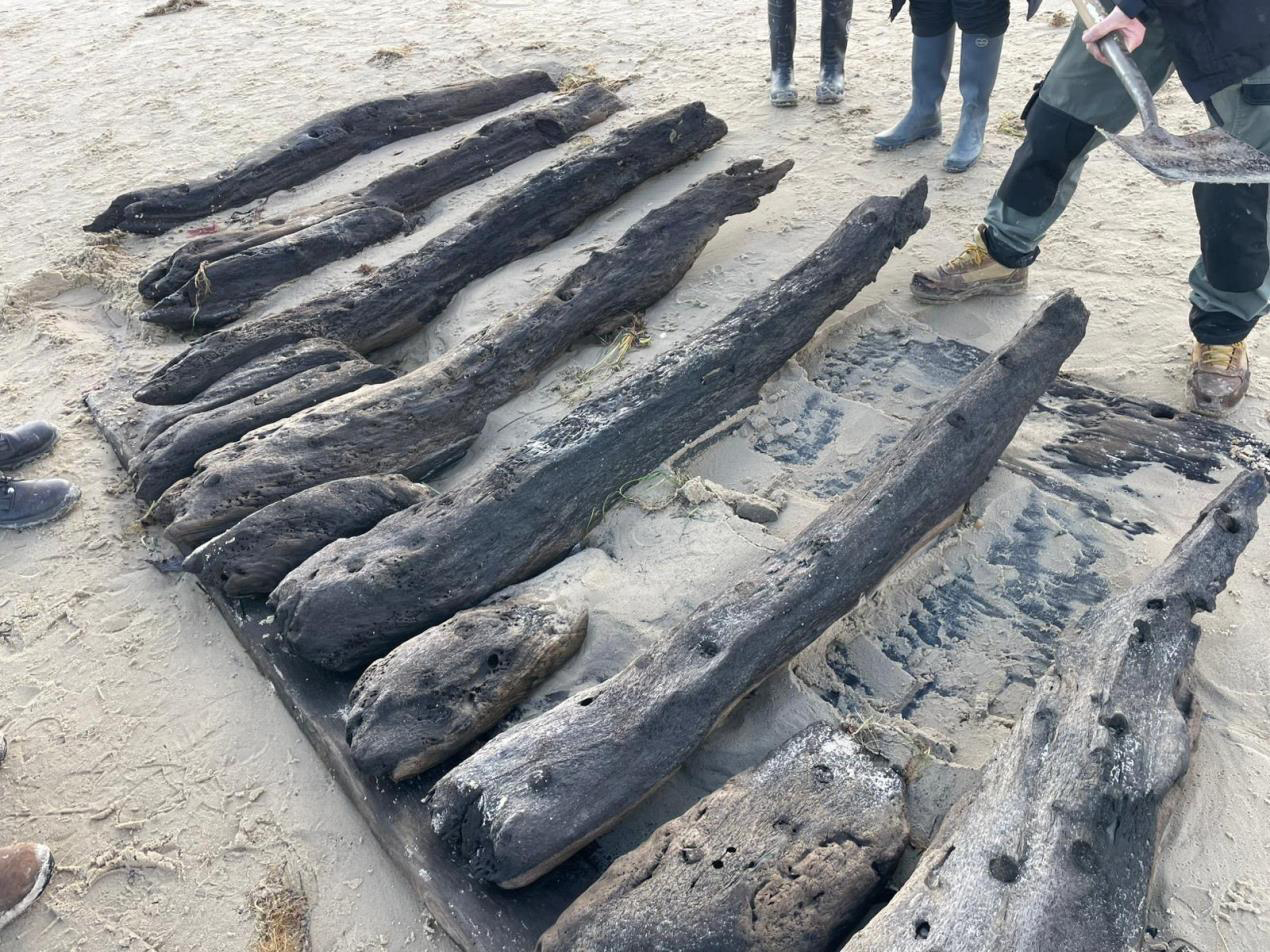
Timbers that were washed up on a beach in Studland on 28 January following winter storms are believed to be from a historic shipwreck dating back to the 17th century.
The wooden frames were identified by Bournemouth University’s (BU) maritime archaeologists. Tom Cousins, who led the survey, believes the timbers are very likely to be a section of the Swash Channel wreck, a shipwreck first discovered in the 1990s in the Swash Channel, a key shipping approach to Poole Harbour. Analysis and historical records indicate the wreck is Dutch or German in origin and most likely ‘The Fame’ from Hoorn, a Dutch merchant ship which ran aground and sank in 1631.
Cousins said: “It’s really exciting to find this piece of a historic ship. During our excavation of the Swash Channel wreck in 2013, there were pieces of the ship missing and we do believe a section of the hull has now been revealed at Studland.”
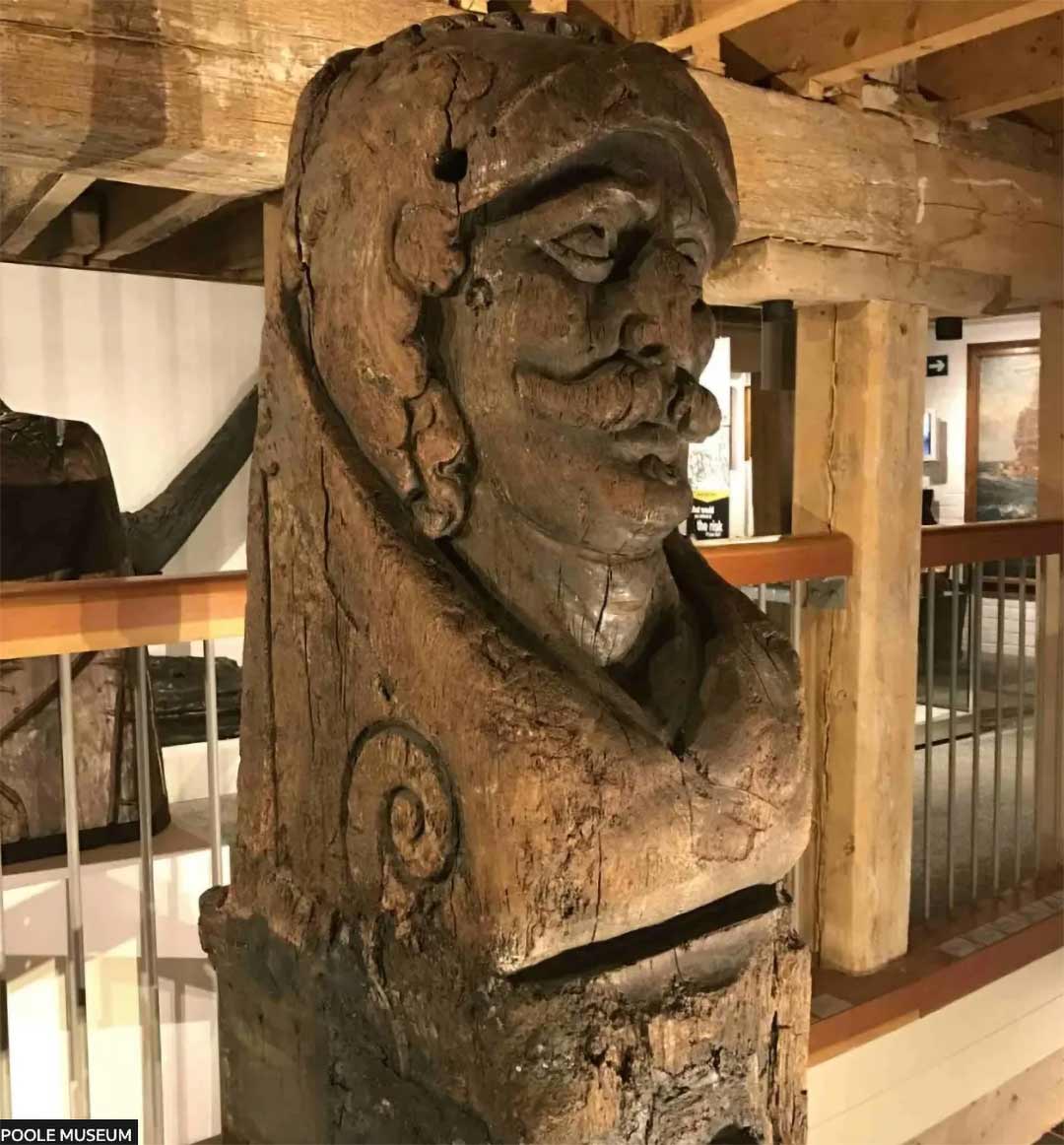
In 2013, after almost 10 years of underwater investigations and what became the largest excavation since the ‘Mary Rose’, parts of the Swash Channel wreck — including an intricate wooden carving of a head, a 25 ft rudder and other artefacts — were brought to the surface. They are now on display at Poole Museum.
The washed-up remains measure approximately 6 m long and 2 m wide and consist of at least 15 frames connected with wooden treenails to five outer hull planks. The frames appear eroded, but the hull planks are in excellent condition.
There would originally have been another layer of planking on the inside of the vessel, but this appears to have been lost. The archaeology team say this suggests the remains have been buried in sand since the 1630s and intermittently exposed over the centuries. This explains why the inner planks are missing and the frames eroded, while the outer hull planks have survived in good condition.

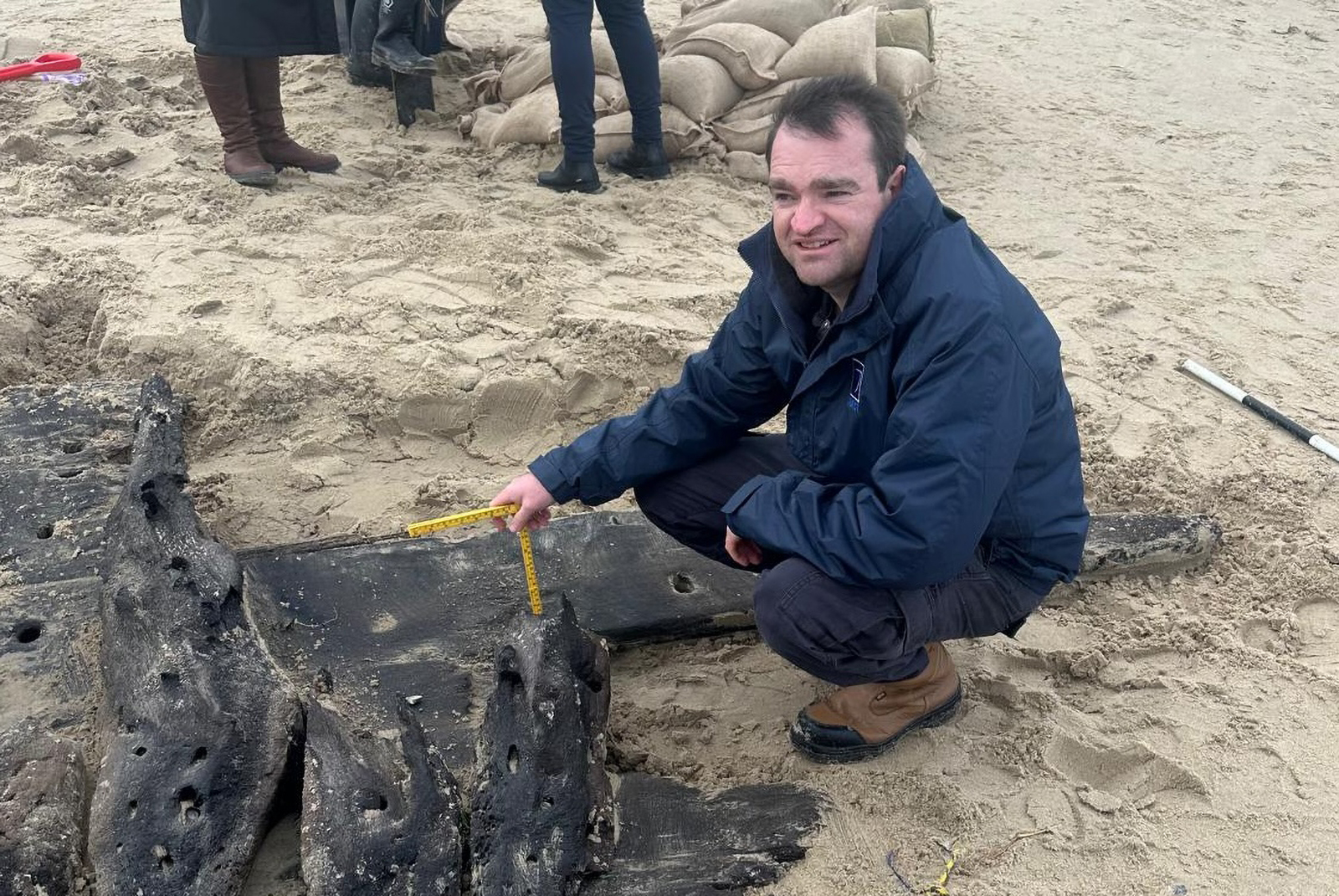
Tracey Churcher, general manager for the National Trust in Purbeck, said: “I’m always astounded by the history we find at Studland, but this has been a real treasure. The wooden tree nails are still in place and holding after 400 years — what a testament to the craftsmanship at the time.”
The timbers will now be tested to identify when and where they were grown and to find out whether they match those analysed from the Swash Channel wreck.
Hefin Meara, a maritime archaeologist from Historic England, said: “The Swash Channel wreck is one of only 57 shipwrecks around the coast of England designated under the Protection of Wrecks Act 1973. Firmly dated remains of vessels predating 1700 are exceptionally rare. We can’t say for certain that these fragments come from that wreck site, but it’s an intriguing possibility.”
The team at BU have applied to Historic England for permission to excavate the timbers so they can join the collection on display at Poole Museum. Until then, visitors are asked to help protect the site by not touching or damaging the exposed timbers.
Please share post:
LATEST NEWS:

CHARITY OF THE YEAR 2026

Subscribe to the online magazine news letter