Motoring & Transport, Nature & Wildlife, New Forest | Posted on January 22nd, 2026 | return to news
Animal accidents rise in New Forest
There was an increase in animal accidents in the New Forest National Park in 2025, with a total of 108 recorded.
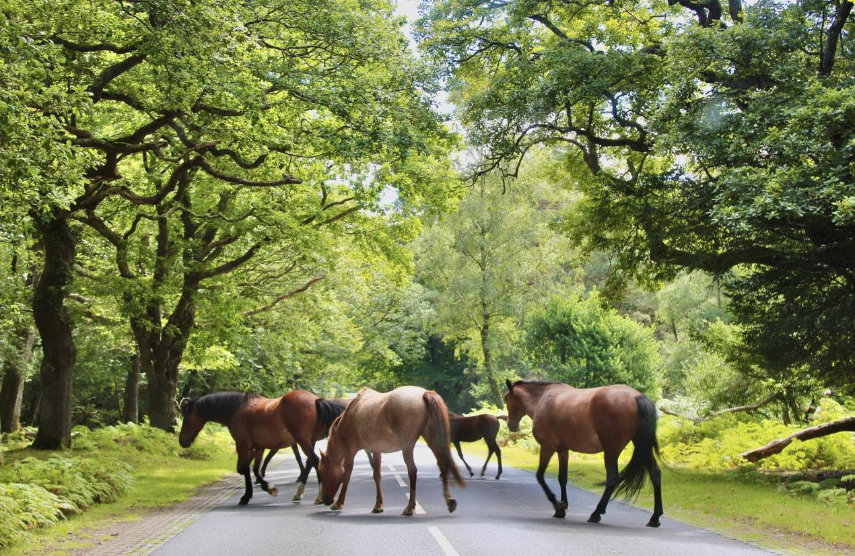
Last year saw an increase in accidents involving animals in the New Forest, and drivers are being urged to drive more carefully.
In 2025, there were 108 incidents involving ponies, cattle and donkeys, with 47 animals killed, compared to 97 accidents and 37 deaths the year before.
Last year follows the lowest deaths on record in 2024 and is the highest number of animals killed or destroyed because of a road accident since 2020. However, the overall trend since 1991 has been downwards.
While accidents at night fell in 2025 compared to 2024, it remained the time of day when most accidents occur. Alarmingly, accidents in daylight and twilight increased.
Hit and runs also remained consistently high, with 18 recorded, compared to 19 and 18 in the two years before. It is a legal requirement to report any road accident involving New Forest livestock to the police within 24 hours, even if the animal has run off. A What3Words location can help with finding the animal. There is a hit-and-run reward scheme of up to £5,000 for information leading to the conviction of a driver who has failed to report an animal accident they were involved in.
New Forest organisations involved in the Animal Accidents Reduction Group – a campaign group which aims to reduce the number of accidents in the Forest – are renewing calls for motorists to drive with care and to the conditions, and to pass livestock wide and slow.
New Forest National Park Authority member Ann Sevier said: “The rise in accidents involving free-roaming livestock is disappointing. Their grazing habits create the conditions that make the New Forest National Park a world capital for wildlife that we all enjoy; therefore, we have a duty to protect them.
“As part of Team New Forest, we must all do our bit by driving to the road and weather conditions, being mindful that the animals have right of way and passing them wide and slow.”

Commoners Defence Association (CDA) chairman Andrew Parry-Norton said: “Every Commoner dreads the phone call in the evening or the middle of the night from the Agister.
“Hearing that one of your animals has been killed on the road is devastating. These animals are not just livestock – many have been bred and cared for by the same families for generations, and each one is known and valued.
“While there is a financial cost, it is nothing compared to the emotional loss felt by the Commoner and their family. Losing an animal in this way is deeply distressing, and with the rise in accidents we are seeing, that impact is being felt far too often across the Forest.”
Forestry England community manager Charlotte Belcher said: “It’s so important that all of us driving through the Forest are alert for ponies and animals. They can be on or near the road at any time, day or night.
“Working with the local police and partners, we regularly speak to drivers to remind them of the dangers. Some tell us they think it will never happen to them, but as the number of accidents last year shows, the risks to animal and driver safety are increasing.”
Head Agister Jonathan Gerrelli said: “It’s very disappointing that the number of accidents has increased, despite the efforts of the organisations involved in trying to reduce them, including Forestry England, who cut back roadside vegetation to increase visibility for drivers, Hampshire Police and Operation Mountie for speed enforcement, and the ongoing hard work tirelessly carried out by the Animal Accidents Reduction Group and New Forest Roads Awareness.
“I would again like to remind drivers to drive with care on Forest roads, drive to the road conditions and pass livestock wide and slow. If you are unfortunate enough to be involved in an accident with a Forest animal, please report it to the police as soon as possible. The Agisters are on call 24 hours a day to deal with livestock emergencies.”
Gilly Jones, New Forest Roads Awareness and chairperson of the Animal Accidents Reduction Group, said: “The aftermath of an accident has a serious effect on the driver, passengers and witnesses. All drivers should expect that, once they cross a cattle grid, they will encounter livestock.
“While speeding is a factor, inconsiderate driving around livestock has also caused some of these accidents. The increase in accidents in daylight and twilight is the most worrying statistic.
“We have to collectively work harder to get these figures back down. We ask companies that use Forest roads to sign up to the New Forest Drive Safe initiative.”
The Animal Accidents Reduction Group includes the Commoners Defence Association, Forestry England, Verderers of the New Forest, New Forest National Park Authority, New Forest District Council, Hampshire County Council, Hampshire Constabulary, New Forest Trust, and the British Deer Society.
Please share post:
LATEST NEWS:

CHARITY OF THE YEAR 2026

Subscribe to the online magazine news letter