Nature & Wildlife | Posted on October 30th, 2025 | return to news
Bats move into luxury new home near Longham
A decommissioned pump house owned by Bournemouth Water now offers a warm and comfortable home for bats throughout the year.
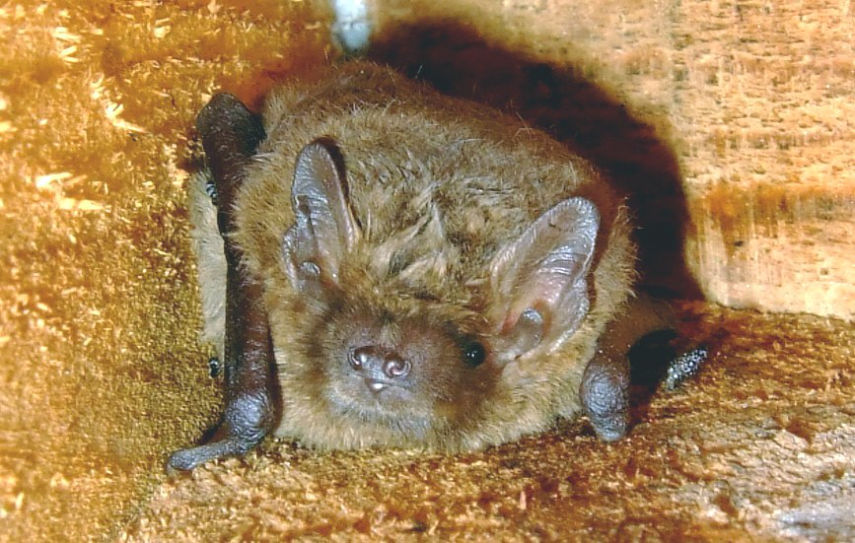
Local bats can now enjoy a new home near Longham.
A decommissioned pump house owned by Bournemouth Water has been given a major makeover and turned into a hibernation haven or ‘hibernaculum’ as it’s formally known. It’s a special sanctuary, complete with bat tiles, built-in bat boxes, baffles and even a dormer ‘fly-in’ entrance.
Paul McNie, Bournemouth Water’s sampling and environmental manager, said: “I was delighted when I saw a bat fly out of one of the wall boxes just after sunset on 21 October. Using a bat detector, I was able to confirm it was a Soprano Pipistrelle bat, one of the most common but smallest, weighing in at only 3-8 grams with a wingspan of 19 to 23 centimetres.”
Given the renovation was only completed in April, Paul says it’s amazing that the bats have already started moving in inside the first active season.
He said: “We like to think of this as a kind of bat house renovation project. The old building was no longer serving its original purpose and was deteriorating, making it unsafe, so we’ve re-imagined it as a safe space for wildlife. It’s a brilliant idea, but with a very serious message. Bats and their roosts must be protected, and we all have a role to play in supporting biodiversity and conservation.”
Pipistrelle bats are so small that they can easily rest on the end of your thumb. Despite their small size they are voracious hunters and can consume up to 3,000 small flies, midges and mosquitos in a single night.

The new bat roost has been designed for both summer and winter use, offering cool underground chambers for hibernation as well as warmer loft spaces and boxes for maternity colonies. The design includes:
Bat tiles – modified roofing tiles creating crevice spaces beneath the roof for bats to roost.
Integrated bat boxes – cavity wall boxes built into the new gable ends.
Dormer – a special entrance feature allowing horseshoe bats to swoop in and out.
Eco credentials – built with sustainability in mind and designed to Natural England standards.
During recent surveys, high levels of bat activity were recorded in the area, including pipistrelles, noctules and Myotis species.
While bats don’t ‘announce’ a new roost the way a bird might call others to food, many species share information through sound, behaviour and memory, allowing them to find and occupy new safe havens quickly.
Studies involving radio tracking in the UK show that when a few individuals move to a new roost, others follow within hours or days, implying acoustic or social guidance rather than chance discovery.
That means the new roost could soon provide an important home for more of the discerning creatures.
“There are 18 species of bat in the UK and 17 of those are known to breed here, with Dorset being a particular hot spot,” said Paul. “We know the bats are here in this area, especially the common and soprano pipistrelles, Nathusius’ pipistrelle, noctule, and Myotis species. This is one very special Halloween for me and the rest of the team involved in the project.”
Please share post:
LATEST NEWS:

CHARITY OF THE YEAR 2025

Subscribe to the online magazine news letter