Charity, Health & Lifestyle, Wimborne | Posted on March 11th, 2026 | return to news
How a Wimborne charity is curing cataracts in The Gambia
The effect of cataracts amongst the older population is dramatic as they are unable to carry out tasks vital for survival.
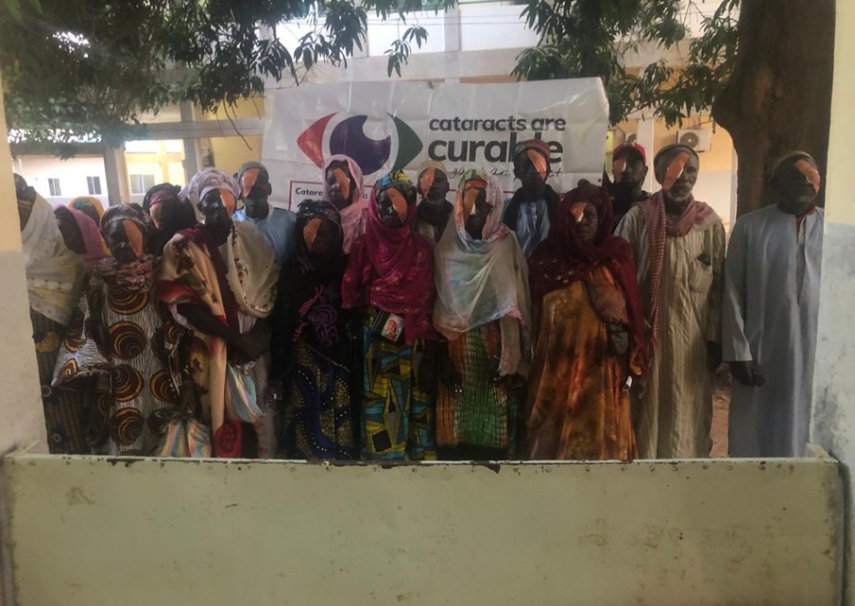
A local charity working out of Wimborne is providing free cataract operations and eye health care for the poorest people in The Gambia.
Some years ago, whilst working with an education charity in the West African country, Violet and Jim Phillips became aware that children who were being sponsored to attend school were being prevented from attending because they were caring for elderly relatives with cataract blindness.
In such a third world country, an individual who is unable to see has an impact on all of their community. Gambians generally cook on the ground, toilets are long-drop or short-drop, and there are other hazards. Many roads are unmade and the cataract-blind person must therefore be accompanied to keep them safe.
Violet said: “We discovered that cataract surgery was available for £40. The problem, however, was that £40 would also pay for the rice and such-like to feed a family of six for nearly a month.
“My husband and I decided to set up a dedicated charity to pay for these operations. It began in 2019 and was registered by the Charity Commission in 2020.”
The couple learned that they could get 50 operations done for around £2,000. Since 2020, just over 2,000 eye operations have been performed. The charity has also widened its remit by carrying out eye health surveys, which have proved a boon.
A different charity called Sightsavers worked in The Gambia up until 2013. They provided training and equipment to enable specially trained nurses to do the examinations and surgery to remedy cataracts. They also conducted eye health screenings to identify cataracts ready for surgery and treat other common eye problems. However, after they left, much of the impetus faded away.

Cataract operations were still available, but the screenings stopped altogether. In a poor country, health spending is concentrated on saving life.
Violet said: “We were told that no-one ever died from a cataract. The emphasis in The Gambia over the last few years has been, understandably, on maternity care.
“We now arrange for eye health screenings over most of this very small country. Ophthalmic surgeons go out to visit one of the 10 health outposts, and locals are invited to have their eyes examined for free. They are issued with simple medication to clear things like ‘dry eye’ and conjunctivitis. Eye health education is also given, so that a good understanding of how infection is spread and can be contained and avoided is delivered.”
Lists of those ready for cataract surgery are also collected.
Violet said that many children have had their sight compromised by the effects of rubbing their eyes vigorously — so vigorously that they change the shape of their eyeball. This can result in myopia or short-sightedness. In classes of children, often in excess of 60 in one classroom, this is catastrophic. Corrective glasses are available, but not really affordable if the family lives on the breadline.
Violet added: “As an educationalist, I also feel there is huge benefit for children to witness ‘professionals’ at work. Young children meet their teachers but that is all. The role modelling that the eye health team provides I consider to be an added benefit. It can have the effect of demonstrating why working hard with your studies is sensible.”
To learn more about the charity or donate, visit https://www.cataractsarecurable.org.
Please share post:
LATEST NEWS:
CHARITY OF THE YEAR 2026
Subscribe to the online magazine news letter