Nature & Wildlife, New Forest | Posted on November 13th, 2025 | return to news
Rare fungus arrives in the New Forest
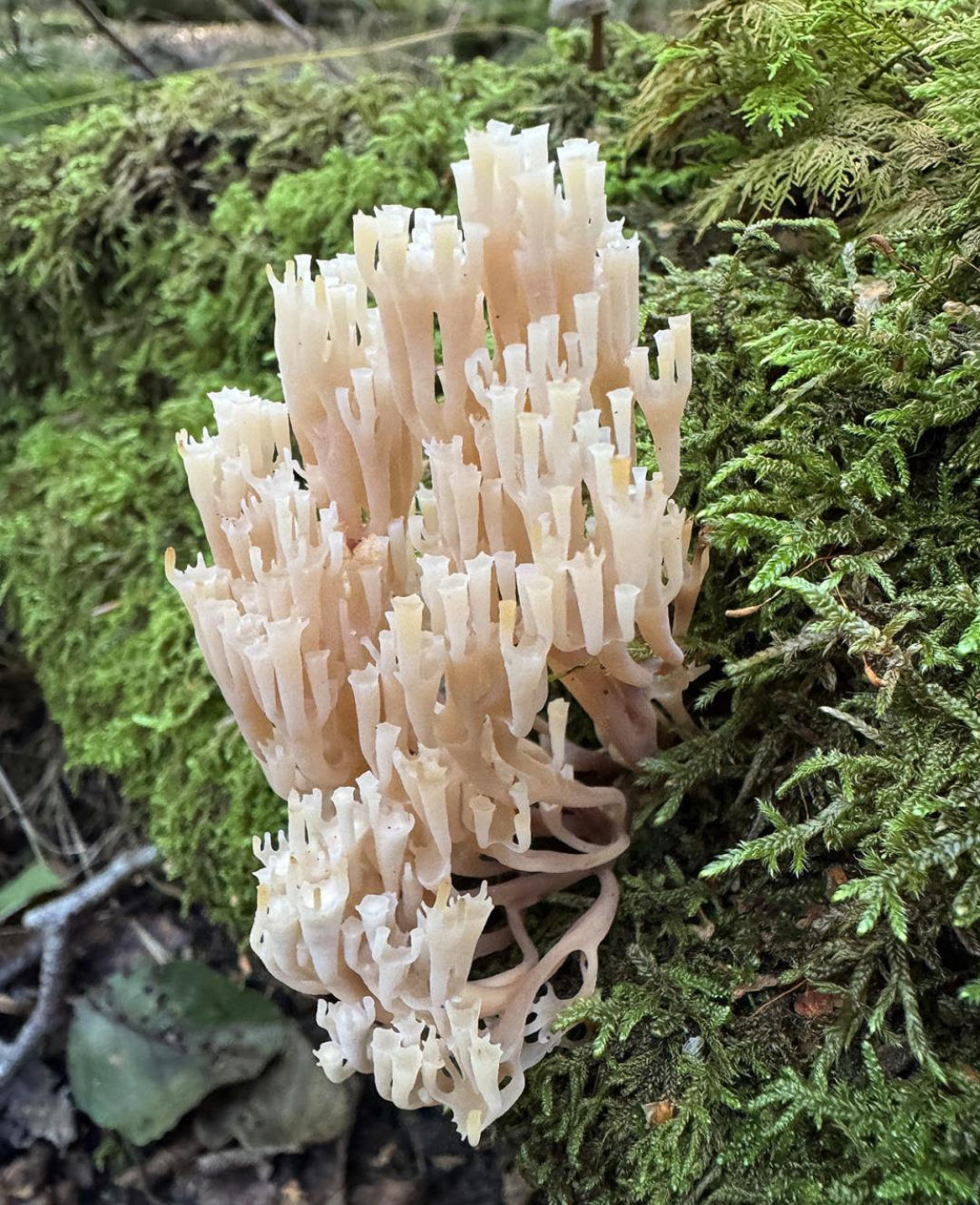
Candelabra Coral, which resembles a candelabra, has been spotted in several areas for the first time ever.
People walking in the New Forest recently might have spotted something rather unusual.
A rare fungus, the elegant Candelabra Coral (Artomyces pyxidatus), has been seen in several areas for the first time.
It is notable for its distinctive appearance thanks to its crown-tipped, creamy-white branches resembling a candelabra.
One of the discoveries was made by Professor Russell Wynn, director of Wild New Forest, at a site that is part of the Species Survival Fund (SSF) project, which is led by the New Forest National Park Authority.
“The sudden arrival of the Candelabra Coral in the New Forest this autumn is remarkable,” he said.
“We are already aware of at least six sites where it has been found in recent weeks. Given it is a relatively distinctive and identifiable species, it is unlikely that it would have been overlooked in the past.
“The arrival in the New Forest also parallels similar first appearances elsewhere in southern England, although the exact drivers are unclear.”
Candelabra Coral is typically found on decaying deadwood, such as rotting beech and silver birch logs, and thrives in moist woodland environments.
The fungus, which can grow up to 10cm high, was thought to be extinct in the UK, with no records during the 20th century.
However, it was rediscovered in Suffolk in 2012, and in the last five years it has been recorded in at least 10 English counties.

The New Forest is a stronghold for many rare species of fungi and altogether hosts nearly 3,000 different species, about a quarter of the UK total of around 12,000 species.
SSF is a collaborative project involving five partner organisations working to protect and expand habitats from the Forest’s inner core to its outer edges and beyond, restoring land equivalent to 350 football pitches for nature.
The £1.3 million scheme has seen wildflower meadows planted, ponds created, and heathlands and woodlands restored to allow a wide variety of species to thrive.
Wild New Forest has been carrying out wildlife surveys to generate a biodiversity baseline and identify priority species at different sites before work took place.
Russ said: “These survey data are being used to inform management actions delivered through the SSF project, including the removal of non-native rhododendron to restore woodland habitats, which should increase the diversity and abundance of fungi and other species.
“The New Forest National Park is a national biodiversity hotspot with an estimated 20,000 species of animal, plant and fungus. Fungi are an important part of the ecosystem, so we ask people to look but not pick, and to leave fungi for wildlife and other people to enjoy.”
Wild New Forest is one of the five partner organisations working on the conservation project alongside Amphibian and Reptile Conservation, Freshwater Habitats Trust, Hampshire and Isle of Wight Wildlife Trust, and New Forest Commoners’ Defence Association.
The project is funded by the government’s Species Survival Fund. The fund was developed by Defra and its arm’s-length bodies. It is being delivered by The National Lottery Heritage Fund in partnership with Natural England and the Environment Agency.
Please share post:
LATEST NEWS:

CHARITY OF THE YEAR 2025

Subscribe to the online magazine news letter