Nature & Wildlife, New Forest | Posted on September 15th, 2025 | return to news
Rare ladybirds discovered in the New Forest
A trio of the colourful insects which haven’t been seen in the area for more than 15 years have been recorded.
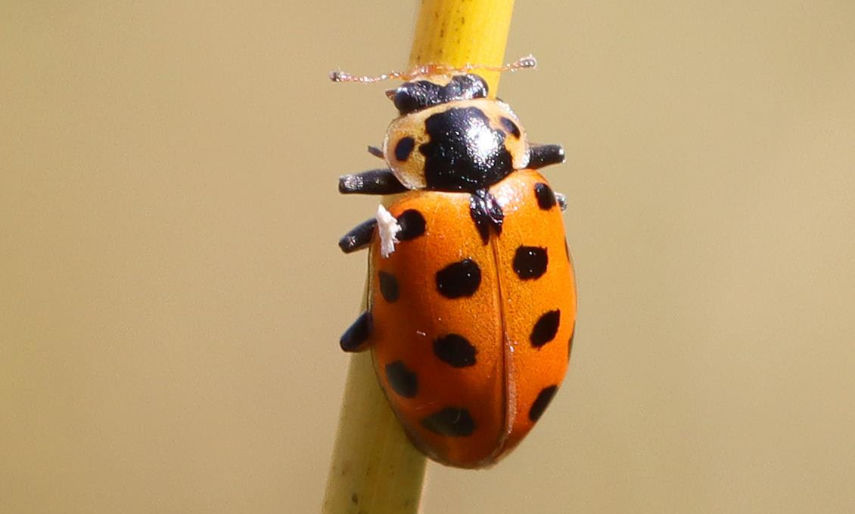
The New Forest has been home to rare ladybirds this summer.
A trio have been recorded with one new to Britain and one not seen in the area for more than 15 years.
Ladybirds are key indicators of ecological change and the presence of these species in the New Forest is linked to habitat quality and the changing climate.
It comes during a particularly good year for ladybirds generally in the UK, with the warm weather this spring and summer resulting in very high numbers.
Two of the exciting discoveries were made during surveys for the Species Survival Fund (SSF) project, a collaborative scheme led by the New Forest National Park Authority (NPA) to restore and expand habitats from the inner core of the Forest to its outer edges and beyond.
The surveys, conducted by Wild New Forest, take place to assess sites ahead of inputs by other organisations.
The most notable discovery was the 13-spot Ladybird, a wetland species which was discovered in damp, meadow habitat and which has not been seen in the New Forest for nearly two decades.
The rediscovery comes at a promising time, as ponds due to be created at the site for the SSF project will increase the available habitat for this and other wetland species.
The other nationally scarce ladybird discovered during survey work was the Adonis’ Ladybird, which is typically associated with dry, sandy grasslands.

Wildflower meadows created for the SSF project mean aphid populations – the favoured prey of Adonis’ Ladybird – are expected to rise at the occupied sites, creating ideal conditions for them to thrive.
Meanwhile, a small, orange ladybird – called Calvia decemguttata but known informally as the Little Arboreal Ladybird – has also been discovered in the New Forest this year.
Prof Russell Wynn, director of Wild New Forest, said: “The species is common in France but is a new colonist here in the UK and does not yet have an official English name.
“It is likely to have crossed the Channel because of warming temperatures.
“The arrival of the Little Arboreal Ladybird is a fascinating addition to Britain’s ladybird fauna and the New Forest seems to be the core area for this new colony.
“These discoveries underline the importance and value of conservation projects like the Species Survival Fund to the New Forest.”
The £1.3m project led by the New Forest NPA involves five partner organisations coming together to halt species decline and build climate resilience for species like ladybirds by restoring, improving, and connecting their habitats.
The five partners are Amphibian and Reptile Conservation, Freshwater Habitats Trust, Wild New Forest, Hampshire and Isle of Wight Wildlife Trust and New Forest Commoners’ Defence Association.
This project is funded by the government’s Species Survival Fund. The fund was developed by Defra and its arm’s-length bodies. It is being delivered by the National Lottery Heritage Fund in partnership with Natural England and the Environment Agency.
Please share post:
LATEST NEWS:

CHARITY OF THE YEAR 2025

Subscribe to the online magazine news letter