Culture, Wimborne | Posted on January 29th, 2026 | return to news
Wimborne archaeology group wins Roman Society’s Britannia Award
Members of the East Dorset Antiquarian Society have been recognised for their work on Druce Farm Roman Villa.
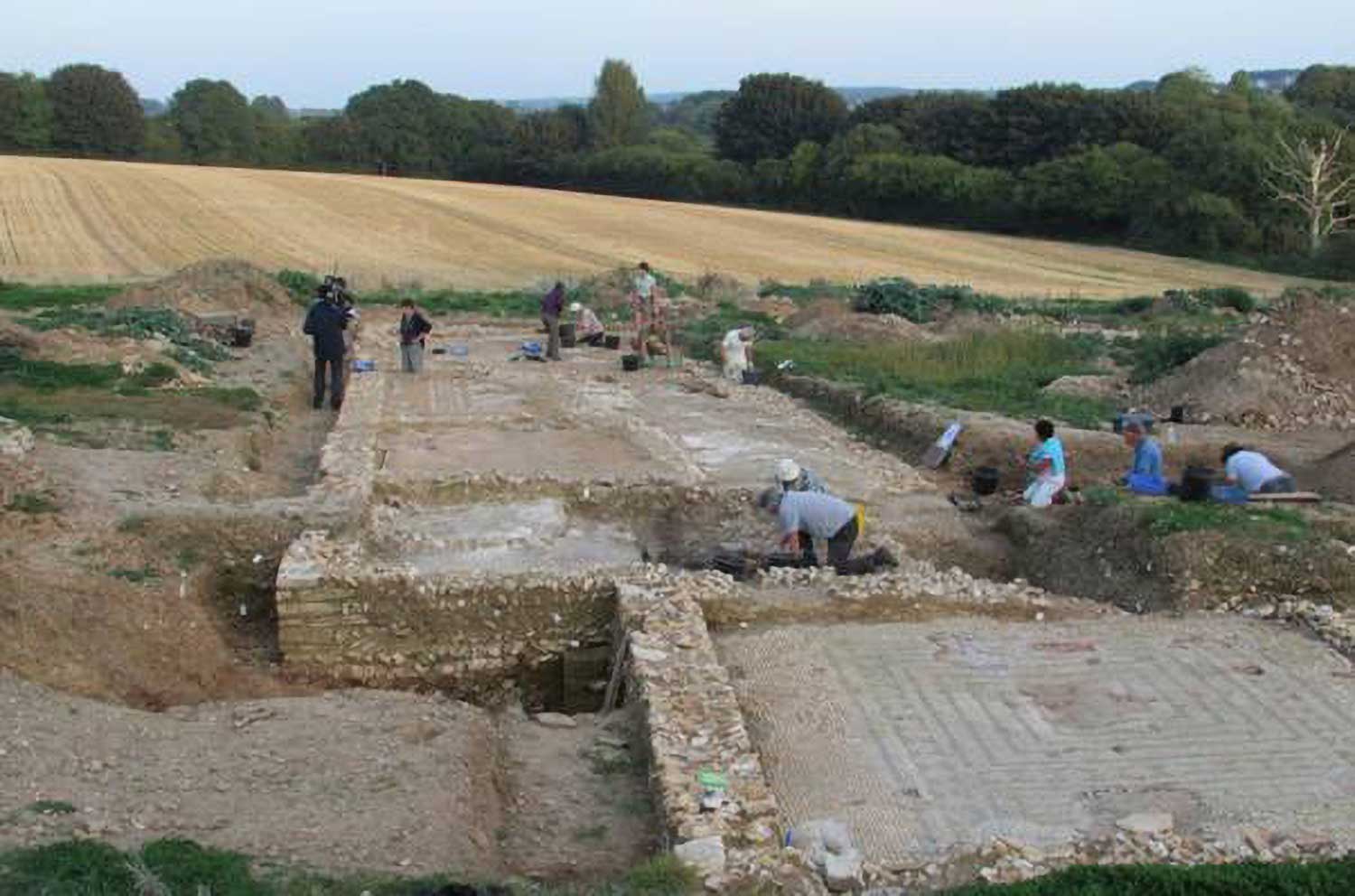
Volunteers from the East Dorset Antiquarian Society (EDAS) — which meets monthly at St Catherine’s Church Hall in Wimborne Minster — have been recognised by the Roman Society for their work on the Druce Farm Roman Villa excavation. The site is in the River Piddle Valley near Puddletown.
The Roman Society, the leading organisation in the United Kingdom for those interested in the study of Rome and the Roman Empire, agreed that the amateur group made “an outstanding voluntary contribution to Roman archaeology in Britain”.
Between 2012 and 2018, EDAS excavations at Druce Farm discovered a Roman villa and a Neolithic site. EDAS site directors Lilian Ladle and Andrew Morgan led a core group of 20 volunteers over seven excavation seasons, working from April through to October each year. They were supported by members of other local societies, notably Wareham and District Archaeology Society.
In total, 140 people spent 4,889 days on site, revealing the villa complex and investigating miles of Roman ditches and middens. Tasks ranged from excavating to washing finds on site, as well as recording and drawing.
EDAS actively engages with local communities, inviting them to share their passion for archaeology and history. During the excavations, more than 250 pupils visited the site, and hundreds of visitors were guided through the villa area on various open days over the years. Many professional archaeologists freely gave their time and expertise, including Professor Sir Barry Cunliffe.
The Roman Society was impressed by the incredible speed with which the work was published. After the dig, volunteers fundraised to pay for expert advice, delivered talks and presentations, created meticulous drawings of key finds, and edited copy and digitised drawings for the final report.

In 2022, Lilian Ladle’s monograph, ‘The Rise and Decline of Druce Farm Roman Villa (60–650 CE): Excavations 2012–2018’, was published. It received several accolades from peer reviews — which are required before publication of any academic work — including “investigative and research work of the highest quality” and “an essential book for anyone studying Roman archaeology”.
Miles Russell of Bournemouth University, who supported the nomination, said: “Both the fieldwork and the final book have contributed significantly to knowledge, especially on villas and the nature of early Roman rural settlement across Dorset and the South West. The nature of the work, which was conducted to the highest of professional standards, should be applauded, especially given the volunteer, part-time status of the excavation, post-excavation and publication team. This is investigative and research work of the highest quality.”
EDAS is a friendly amateur society committed to conserving and promoting archaeological and historical heritage through exploration, excavation and education, including the recording and conservation of archaeological monuments and antiquities.
The society was founded in 1983 and currently has more than 270 members. Practical archaeology remains at the centre of its activities. EDAS is always looking for opportunities to offer its members the chance to gain field experience and acquire skills in both excavation and post-excavation work.
To learn more, visit www.dorset-archaeology.org.uk.
Please share post:
LATEST NEWS:

CHARITY OF THE YEAR 2026

Subscribe to the online magazine news letter