Eco & Environment, Political | Posted on January 30th, 2026 | return to news
Blocked drains not to blame for flooding, says Dorset Council
Dorset Council has responded to comments claiming that blocked drains are the main reason for the recent flooding.
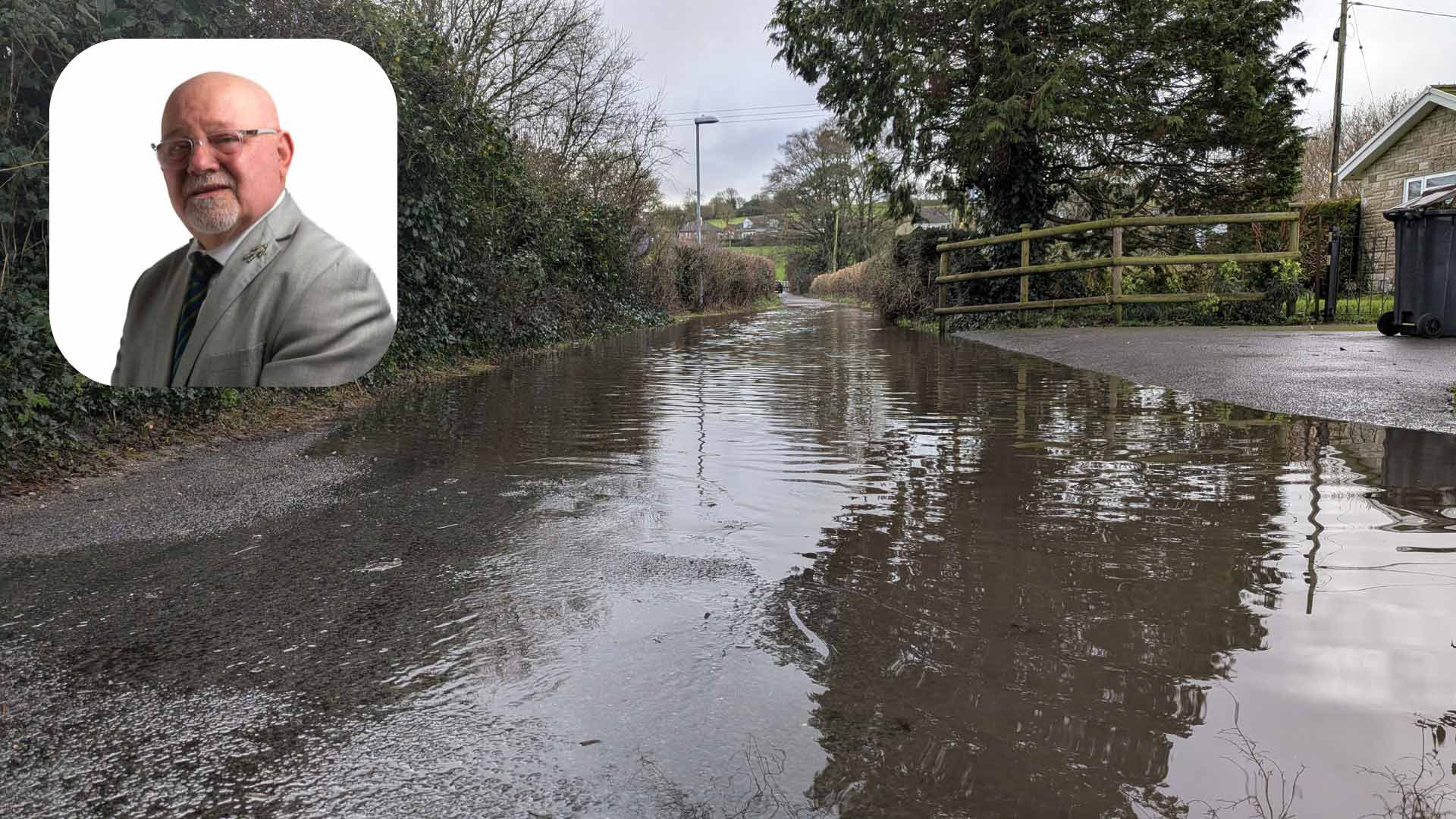
Severe flooding caused by Storm Chandra has caused road closures and travel chaos across Dorset.
Many commenting online have accused Dorset Council of failing to clear blocked drains and that this is the main reason the flooding has been so extreme.
Dorset Council has responded to set the record straight.
Cllr Jon Andrews, Cabinet member for Place Services, said: “We understand the frustration. When water sits outside your home or on the roads you need to travel, it’s completely natural to think the drains must be blocked. And yes, blocked drains can make local problems worse — we’re not denying that.
“But the main issue isn’t drain clearance. Highways drains are designed to deal with rainwater that falls directly onto the road. They aren’t built to cope when rivers spill over, fields release huge amounts of water, or groundwater forces its way up from below. Most of the recent flooding across Dorset came from those sources. When rivers and groundwater rise that quickly, the pipes beneath road drains become completely full, so even a clear drain simply has nowhere to send the water.
“Our crews worked through the night and are out again today clearing debris and tackling the highest risk spots. Alongside this, we carry out routine, proactive maintenance throughout the year. We run a planned programme of gully emptying and drain clearance as part of our regular cyclic maintenance — including emptying gullies, clearing ditches, soakaways and pipe runs.

“The scale of flooding this week was driven by swollen rivers, rising groundwater and exceptional rainfall — not a lack of routine drain maintenance.”
Dorset Council also highlighted that it is responsibility for responding to flooding from surface water, groundwater, and ordinary watercourses, while the Environment Agency oversees the response to flooding from main rivers, reservoirs, estuaries, and the sea.
Cllr. Andrews added: “We work closely with other agencies because major flooding nearly always comes from several sources at once — especially in a rural county like ours, with a huge network of rivers, streams, ditches, and low-lying areas.
“Some people have also claimed that new housing developments are making this worse. It’s worth noting that national planning rules already require new homes to be safe for their lifetime and not increase flood risk for existing communities. That remains the case.
“Looking ahead, responding to the climate and nature crisis is one of our top priorities, which includes helping communities become more resilient as storms and heavy rainfall become more common.
“Please continue to avoid driving through floodwater, follow closure signs and check updates if you’re travelling. We’ll keep clearing what we can as water levels fall.”
Dorset & Wiltshire Fire and Rescue Service has offered travel advice during flooding.
Please share post:
LATEST NEWS:
CHARITY OF THE YEAR 2026

Subscribe to the online magazine news letter