Arts, Wimborne | Posted on September 22nd, 2026 | return to news
Between Ukraine and Dorset
The work of Ukrainian photographer was on show at the Museum of East Dorset over the summer. Iryna Sozanska’s exhibition ‘Occupied/Unoccupied’ captured the fragile line between survival and renewal.
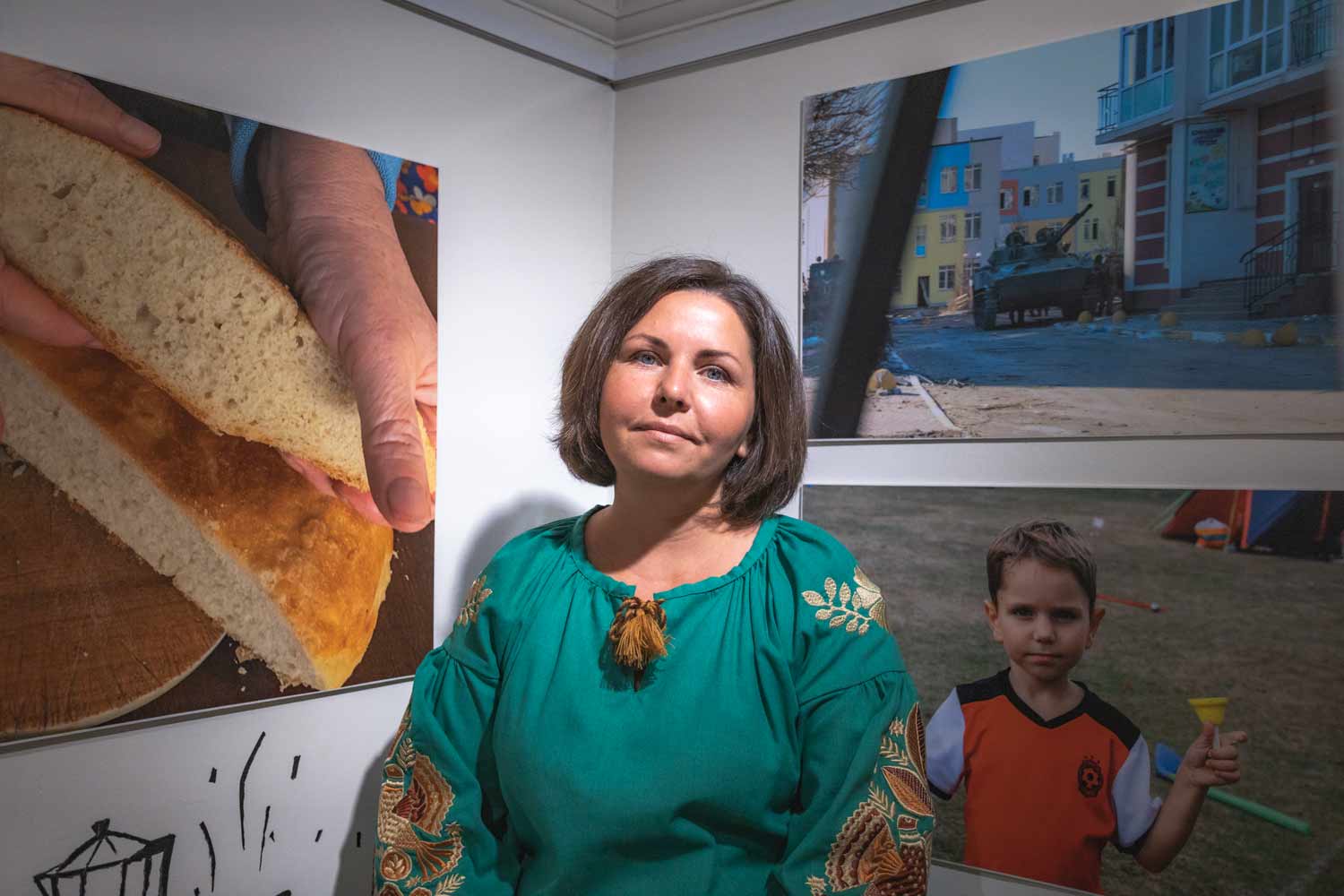
In the early days of Russia’s invasion of Ukraine, Sozanska photographed her family as they lived under occupation and survived evacuation. These images — once simple family snapshots — became symbols of endurance, carried through Russian checkpoints as her family fled their home. Now, living in Ferndown, Iryna revisited those photographs alongside new images of her family’s life in Dorset.
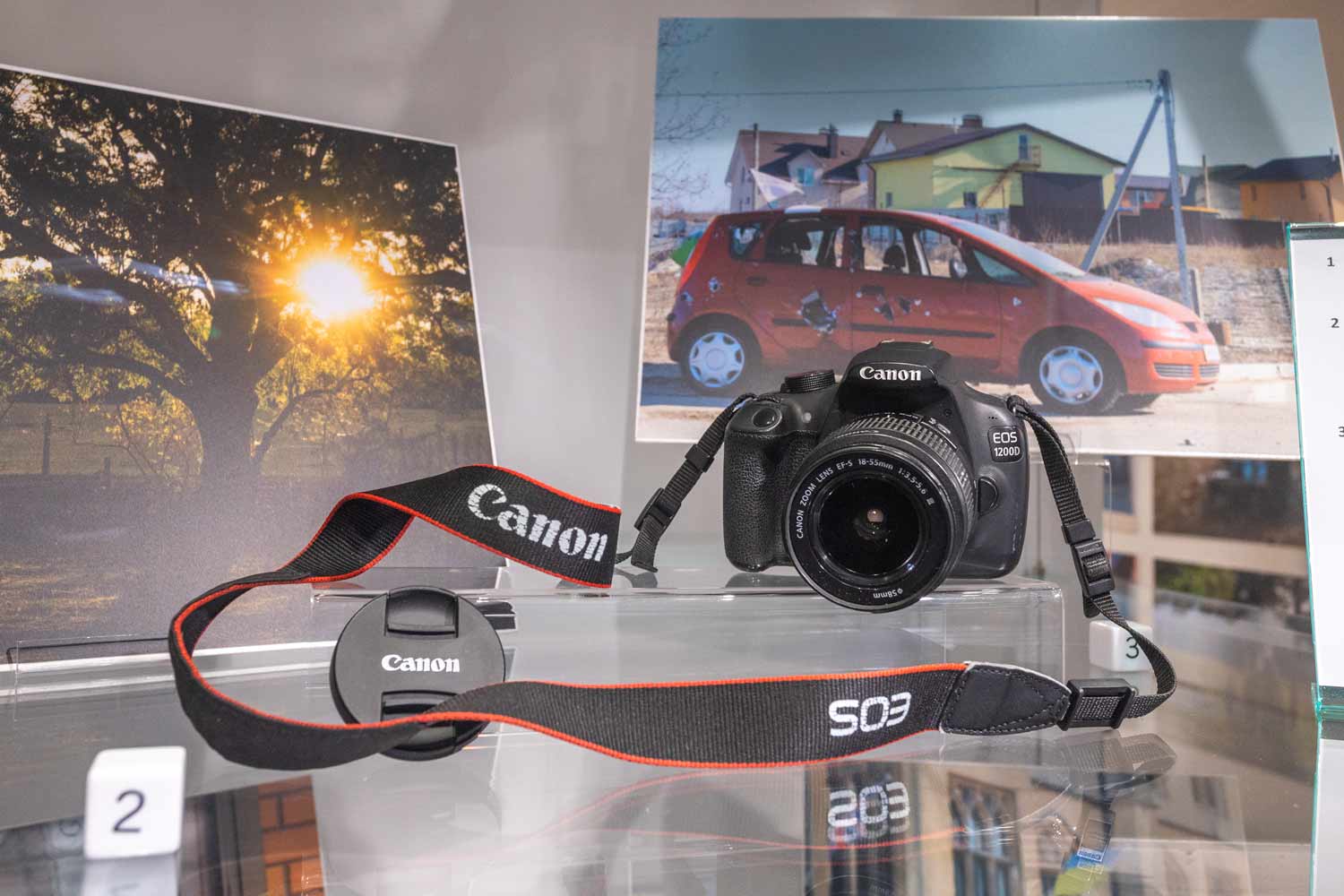
In one photograph, her children shelter behind a mattress as glass shatters during an attack; in another, those same children play freely on the hills of Badbury Rings. Alongside the photographs were personal objects connected to Sozanska’s journey and a short film offering a glimpse into the first days of the war.
Sozanska said: “Photography became my way to hold on — to remember, to process, and to rebuild. These images are about finding light again, even after everything changes.”
In conversation with Iryna Sozanska
By Louis Pulford
1. Can you tell us a bit about yourself, your background and where you are from?
I’m originally from Hostomel, near Kyiv in Ukraine. I am 39, I have 2 children age 12 and 8. I studied sociology at university, but I never really worked in that field. Most of my professional background was in sales, marketing and social media, and in the last year before the full-scale invasion I worked in media Pogliad in Ukraine.
Now I live in Ferndown with my children. I work as a teaching assistant at Ferndown Upper School and continue developing my photography. I never imagined that photographs I took during the worst period of our lives would one day be exhibited in British museums.
2. Can you describe the feeling when you were first made aware of the invasion?
We woke up to the sound of explosions. We checked our phones and one of our friends told us that it had started.
It was very scary, but at the same time we could hardly believe it was real. I think we all thought it might end within a few hours because the idea of invading another country like this in the 21st century just seemed ridiculous.
We didn’t know what to do. My daughter was eight, and she even had her online school lesson that morning because nobody really understood yet how serious everything was.
We started checking the internet. There was terrible traffic everywhere and huge queues at petrol stations, so we decided to stay at home and see what happened.
Just to feel that we were doing something, we started putting tape across the windows to reduce the amount of broken glass if there was an explosion nearby.
3. Can you share one key moment or memory from your experience during the invasion / evacuation?
One of the memories that has stayed with me is bread.
During the occupation we still had some food, but we had no idea how long we would have to stay or how long we could keep it. At some point we had no gas or electricity, so food from the fridge and freezer had to be cooked quickly or thrown away.
We couldn’t just go to the shop and buy bread. Then we realised that we were using the last flour we had, and nobody knew when, or even if, we would eat bread again.
I remember my former mother-in-law making bread from that last flour, and I photographed it.
Normally you would never think of photographing a loaf of bread. But in that moment, it meant something completely different.
4. What initially got you into photography?
I’ve always been a very visual and artistic person.
I had a professional camera before the war, but mostly used it for family events. I was learning by myself, practicing, editing and experimenting.
When I started working in media, I understood even more how important visual content is, especially when it comes directly from a real person who is actually there.
During the occupation I could barely think about photography at first. But when the electricity went off and I could no longer charge my phone properly or synchronise my storage, I remembered that my camera was in the cupboard and, luckily, it was charged.
So I took it out and started photographing what was happening around us.
I think that was the moment photography stopped being only something I enjoyed and became a way of documenting our reality.
5. Can you tell me a bit about the Occupied / Unoccupied exhibition?
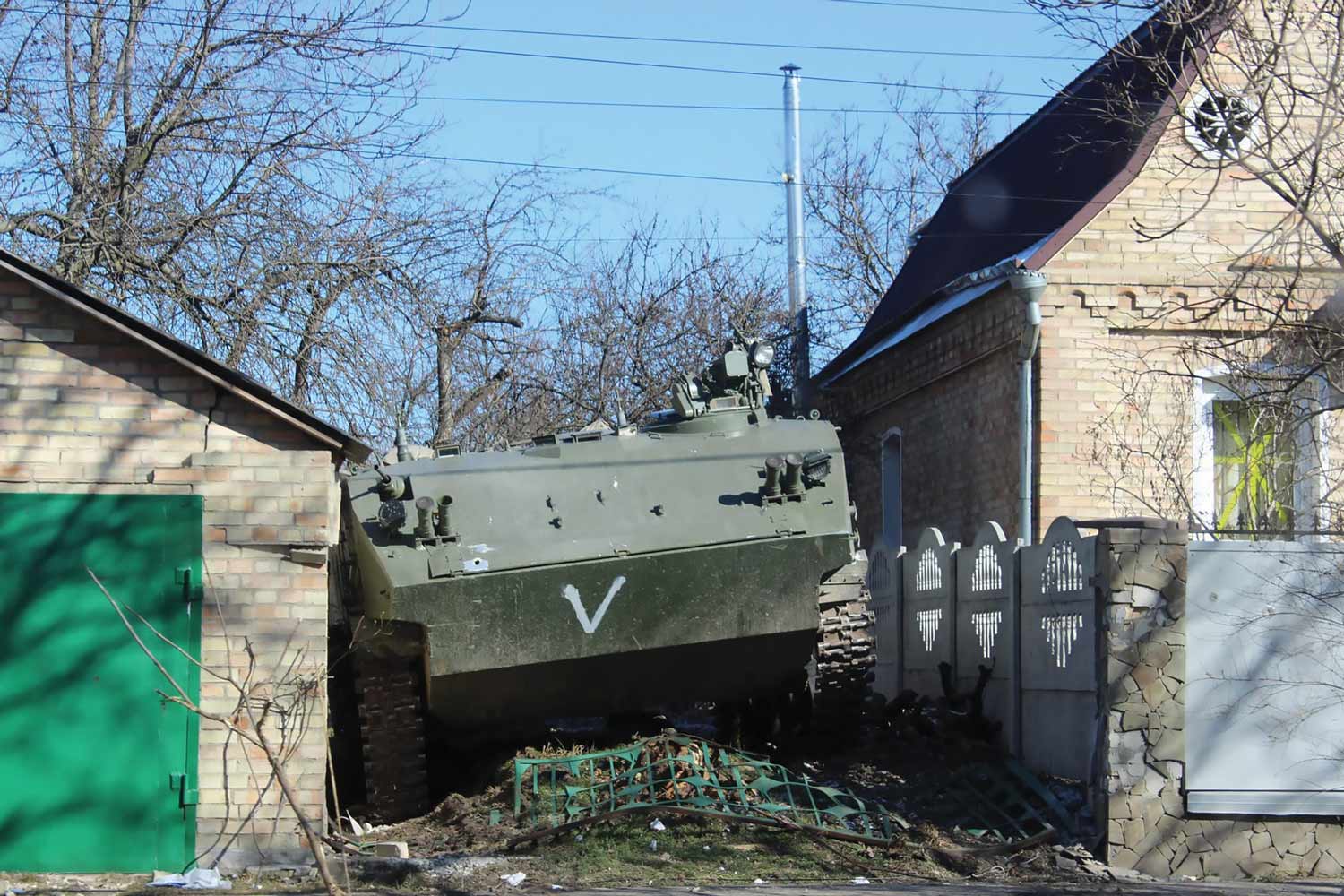
Occupied / Unoccupied began with the photographs I took during the occupation of Hostomel.
Later, when we were living safely in Dorset, I started to heal a little from the trauma and finally looked properly at the photographs. I began showing some of them to friends and noticed how emotional people became. That was when I realised these pictures needed to be seen.
I had never created a photography project before, so I started researching, reading, looking at other photographers’ work and learning how to put a project together.
I didn’t want the exhibition to show only occupation and destruction. I wanted to balance it with something hopeful. That is how the second part, Unoccupied, developed – our forced relocation and the process of building a life here in the UK.
The project has been shown in several places. It was exhibited at Russell-Cotes Art Gallery & Museum in Bournemouth from January to March 2026, and there were also exhibitions in Norfolk through a Ukrainian women I connected with on Facebook, and in Warwickshire as part of Voices of Ukraine with the charity Belvedere.
Now it is at the Museum of East Dorset, which is especially significant for me because this is the area where we rebuilt our lives.
In August we also had a lovely after-hours event few days before Ukrainian Independence Day. Around 45 people came, and I had the chance to speak about the exhibition and our experience. I also met local MP Vikki Slade, who has been very supportive of Ukraine.
Next year I would like to contact more museums and galleries and try to bring the exhibition to London and other cities. Ukraine appears less in the news, but the war is still going on. It is approaching five years. I think it is important that people do not become used to it or forget that it is still happening.
6. What is your favourite photograph in the exhibition and why?
It is very difficult to choose because these are photographs of my own family, so every image has a memory attached to it.
One of the stories I am most attached to is actually the mangal rather than one particular photograph.
During the occupation, when we had no electricity and gas, this ordinary barbecue became very important. We used it to cook, boil water and make coffee.
For the exhibition, I recreated it as a masking-tape drawing on the museum wall. I like it because it is such an ordinary object, but for us it became a symbol of survival and trying to keep some kind of normal life.
7. What has living in Ferndown been like in contrast to your home town before the war?
I don’t want people to imagine Hostomel only as the place they saw on the news.
Before the war it was simply our home. We had our routines, friends, schools, work and family. We used to walk to the lake near us to see the ducks in summer and slide on the ice in winter. We had barbecues in the garden and the children played at the playground near the village shop.
Ferndown is obviously very different, but there are little things that sometimes remind me of home.
We like walking around Longham Lakes, definitely not sliding on them in winter though but kayaking during the summer. There is also the park in Ferndown with the playground, little kiosk and skatepark, which the children enjoy.
Sometimes we walk in the woods, and the smell of wet grass and pine trees reminds me very strongly of the forest near our home in Ukraine.
Dorset gave us something we desperately needed at that time: safety and the possibility of having ordinary life again.
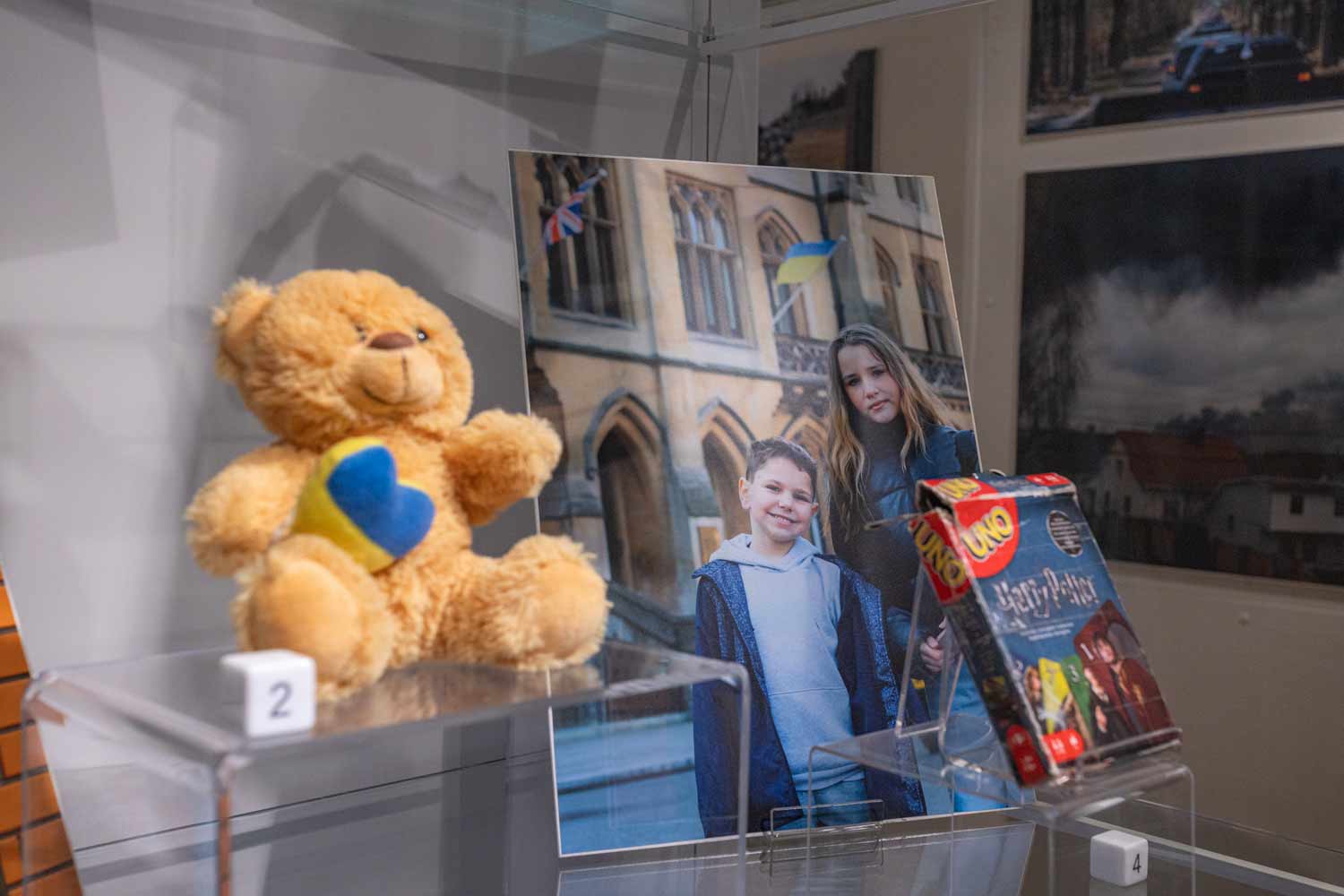
8. Finally, if you had anything you would wish to share with the people of Dorset, what would that be?
Mostly, I would like to say thank you.
When we arrived here, we had no idea what our future would look like. Jenny and Tony, our hosts, opened their home to us, and so many other people helped us in ways they probably don’t even realise.
Four years later, my children have a life here, I work in a local school, I am exhibiting my photographs in a local museum, and people are giving their time to come and look at our story. That means a lot to me.
I also hope people understand that behind the word “refugee” there is simply a person who had a completely normal life before something happened that they could not control.
And I hope the exhibition is not only seen as a story about Ukraine. I hope people recognise something universal in it – family, home, fear, safety, and how important ordinary peaceful life really is.
Dorset gave my family a safe place when we needed it most, and I will always be grateful for that.
Please share post:
LATEST NEWS:
CHARITY OF THE YEAR 2026
Subscribe to the online magazine news letter