Nature & Wildlife, New Forest | Posted on April 23rd, 2026 | return to news
Pine martens discovered in the New Forest
Members of the weasel family are among 1,100 species recorded in the New Forest during a two-year nature recovery project.
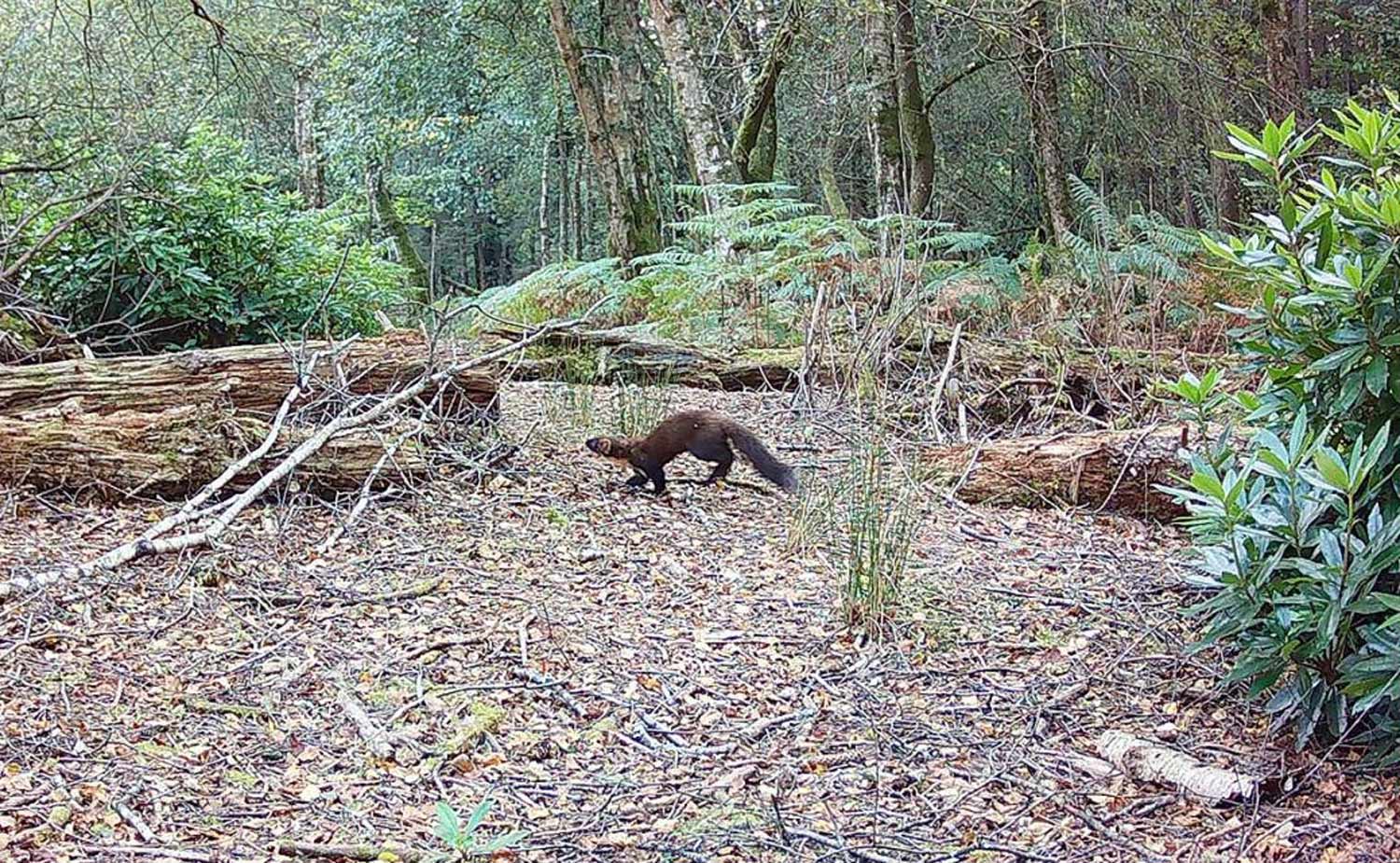
Pine martens, sand lizards, water shrews and adders, alongside the candelabra coral fungus, are among 1,100 species recorded in the New Forest during a two-year nature recovery project.
Almost 100 different types of bird and more than 300 plants were identified through survey work during the project, which saw 321 hectares of land – the equivalent of 418 football pitches – enhanced for the benefit of New Forest species.
Experts from various organisations came together for the £1.3 million Species Survival Fund scheme, led by the New Forest National Park Authority, to create and restore grassland, heathland, wetland and woodland habitats around the edges of the Forest.
The organisations involved were Wild New Forest (WNF), Freshwater Habitats Trust (FHT), Amphibian and Reptile Conservation (ARC), Hampshire and Isle of Wight Wildlife Trust (HIWWT) and the New Forest Commoners’ Defence Association, with support from the RSPB and the New Forest Biodiversity Forum.
It is hoped experts’ work on 31 sites will not only result in the expansion of existing species but also encourage new arrivals through the increase of habitats away from the Forest’s core.
Surveys conducted throughout 2025 by WNF helped influence decisions on how best to care for and create new habitats.
A total of 28 mammal species was recorded.

Prof Russell Wynn, director of WNF, said: “There were multiple sightings of pine martens during surveys in 2024 and 2025, as well as a pair marking their scent on the same rhododendron stump an hour apart in October 2025.
“A nearby camera also recorded a female pine marten transferring at least three kits between den sites, which suggests breeding took place locally.
“As a result, we were able to warn colleagues at FHT and subcontractors about their presence and to ensure any potential den sites were protected during the removal of rhododendron.
“Other mammal highlights during surveys included a rare sighting of a water shrew and three brown hares, plus otters, which are now widespread in most river catchments in the New Forest.”
More than 140,000 individual bat passes were detected during survey work, with all 14 of the New Forest bat species confidently recorded.
Nearly 100 bird species were noted, including 13 ‘priority’ species – those which are afforded special protection during the breeding season – including Dartford warbler, kingfisher and woodlark.
Identifying bird territories helped ensure any work on the ground was timed carefully to avoid disturbing the animals, and there have been some early signs in one area that wetland bird populations have been strengthened.
Seven species of reptile and amphibian were recorded, including two sand lizards, which are nationally red-listed as endangered.
A small colony of the nationally rare 13-spot ladybird — the first New Forest record in over 15 years — was among the 431 invertebrate species recorded, and new ponds created by FHT are expected to further increase wetland diversity and climate resilience.
New and improved wildflower meadows resulted in 320 plant species being recorded, while 267 species of fungi were logged.
“Rare woodland fungi were discovered next to areas where dense rhododendron had been cleared,” said Russell.
“It is not yet fully understood how fungi respond when rhododendron is cleared, but opening up woodland is expected to boost their long-term survival prospects in the New Forest.”
The project was funded by the government’s Species Survival Fund. The fund was developed by Defra and its arm’s-length bodies, and was delivered by the National Lottery Heritage Fund in partnership with Natural England and the Environment Agency.
Please share post:
LATEST NEWS:

CHARITY OF THE YEAR 2026

Subscribe to the online magazine news letter