Nature & Wildlife, New Forest | Posted on April 30th, 2026 | return to news
Collaborative effort to save New Forest tree
Measures have been installed to protect the Queen Oak, which was a sapling at the time of the Black Death.
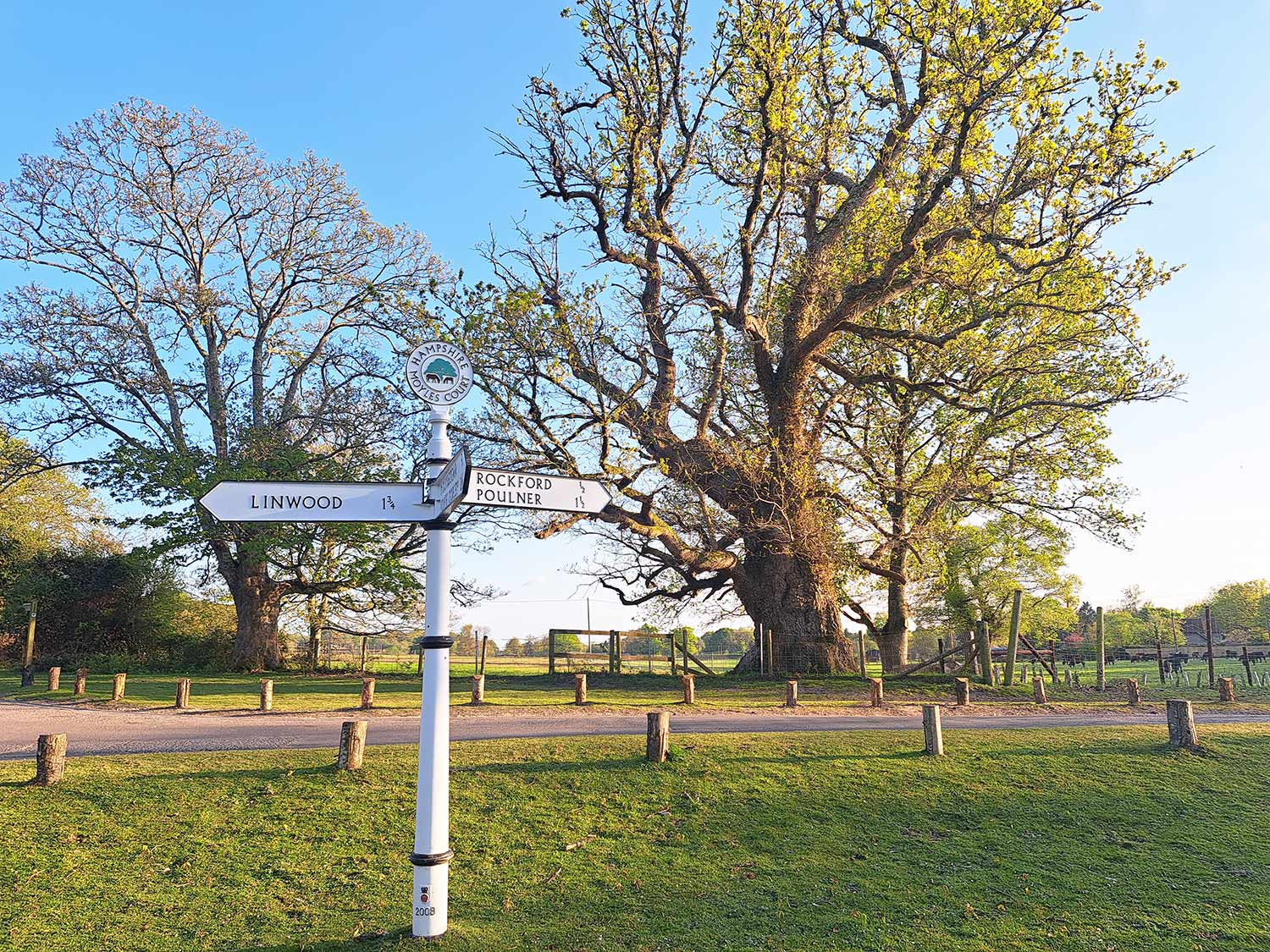
The future of a tree in the New Forest, which is estimated to be around 650–700 years old, is looking more secure. The Tree Council, New Forest National Park Authority (NPA) and the community have come together to install measures to protect the Queen Oak, which sits by the roadside in an area of high visitor traffic.
A sapling when the Black Death was raging through the country, the Queen Oak, and similarly aged trees, become precious nature reserves as they age – full of microhabitats like bark cracks and nesting holes, supporting hundreds of rare and unusual species.
Opposite is the King Oak – another ancient tree – that, although still standing, was declared dead two years ago after nearly seven centuries of life. Its demise was hastened by vehicles and visitors compacting the soil around its base, reducing the vital flow of water, nutrients and oxygen from roots to tree.
The local community was determined the Queen Oak does not suffer a similar fate and installed dragon’s teeth – small wooden posts around the base of the tree – to stop vehicles parking on the verge and damaging this Site of Special Scientific Interest.
Due to the significance of the tree and its location, the success of the project relied heavily on the goodwill and determination of many stakeholders. The Tree Council led the project in partnership with the landowners, The Tree Management Company, ancient tree specialist Mat Shute, the New Forest NPA, Ellingham, Harbridge and Ibsley Parish Council, and the local community, with support from Savills and Kairos Philanthropy.
The Tree Council CEO Sara Lom said: “The UK has more ancient trees recorded than any other country in Europe, and the New Forest has the highest density.
“They are just as important as our stately homes and historic cathedrals but are often overlooked or neglected.

“We have a huge responsibility to do all we can to ensure the health and vitality of these incredible national assets.”
As well as preventing vehicles from parking near the tree and causing compaction, the Queen Oak will benefit from careful pruning of neighbouring competing trees, with bracing applied to support its ancient branches – reducing future vulnerability to storm damage.
James Palmer, the NPA’s tree officer, said: “Ancient and veteran trees are a feature not only of the ancient woodlands of the open Forest, but of the villages and other settlements that have developed over time as an integral part of the Forest landscape.
“The bracing works to stabilise the branch and stem framework, in combination with stopping vehicle access to the tree’s rooting environment, will both reduce the likelihood of future structural risks while seeing a reduction in soil compaction.”
Will Jones, from The Tree Management Company, said: “Having lived in the Forest my whole life, it means so much to have had the opportunity to help protect this special tree, using our collective skills to make a positive difference for its future and supporting an important asset in our ecosystem.”
Rhys Williams, associate EIA consultant at Savills, said: “We’re pleased to have supported this collaborative project, which demonstrates how relatively simple, well-considered interventions can make a meaningful difference to the long-term survival of ancient trees.
“Protecting treasured natural assets like this relies on partnership, local commitment and shared responsibility, and we’re delighted to have helped secure the future of such an important tree.”
Jon Stokes, The Tree Council’s director of trees, science and research, said: “This sort of collective action is exactly what is needed to protect these astonishing trees.
“It needn’t be expensive or time-consuming, and sometimes very simple actions can deliver significant results.
“In 2025, in consultation with more than 50 tree sector partners, The Tree Council published a report making ten recommendations to Defra for the future protection of the UK’s most important trees – with soil compaction among the most common issues.
“A key recommendation is that financial support, from both public and private sources, should be available to the custodians of important trees. This project has put into practice exactly what The Tree Council report suggested, safeguarding the Queen Oak with volunteer goodwill, community effort and financial support from this group of partners.
“We hope this sets a model that can be replicated in future, not only with those trees still in need all over the New Forest, but also all over the country.”
Please share post:
LATEST NEWS:

CHARITY OF THE YEAR 2026

Subscribe to the online magazine news letter